Pismo Beach Says It's Built Out. Its New Housing Rules Show What That Really Means for Buyers
September 17, 2026
September 17, 2026
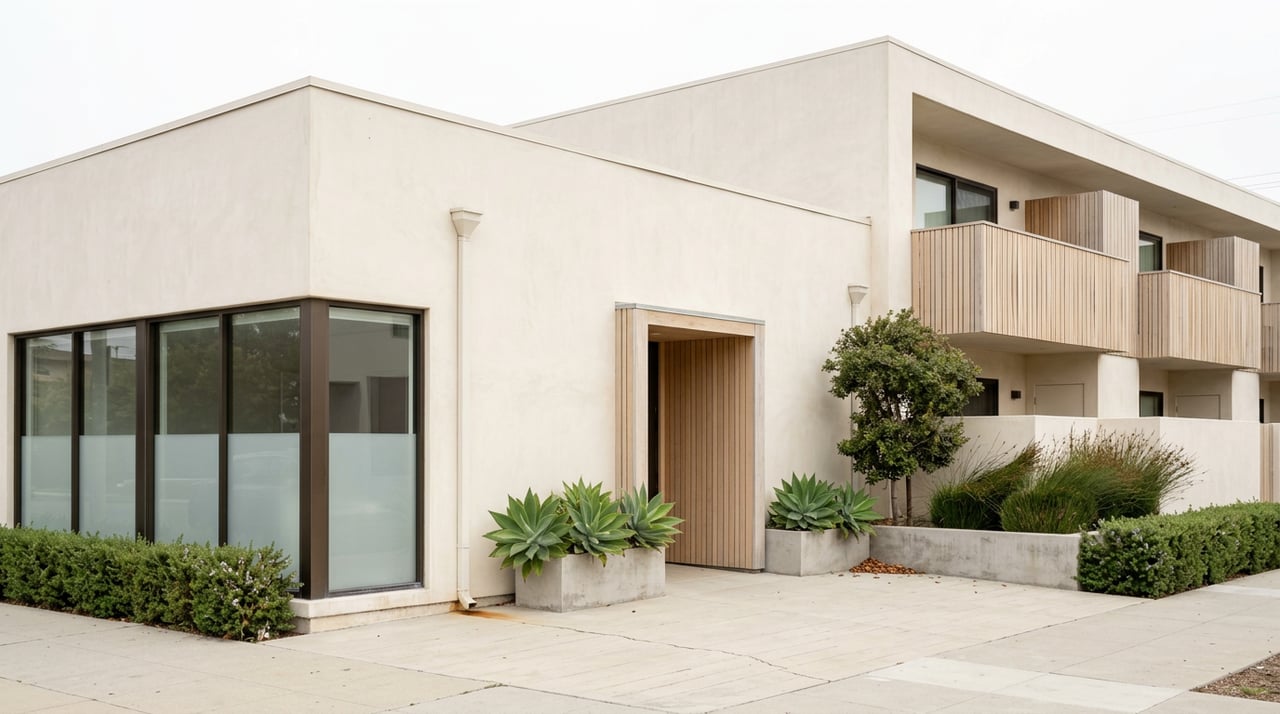
On June 9, 2026, the Pismo Beach Planning Commission approved a development that tells you more about this market than any listing ever could. The project sits on a 9,007-square-foot parcel at 1717 Shell Beach Road, barely a fifth of an acre. When it's finished, it will hold two commercial spaces, seven residential units, five of them sold at market rate, one deed-restricted as affordable housing, and one accessory dwelling unit. Architecture firm Hamrick Associates designed it with consulting help from Hunter Smith Architecture, and Planning Commission Chair Clare Malone Prichard called the density appropriate for the location when the vote came down.
That project is not an outlier. It is close to a preview of what "new construction" is going to mean in Pismo Beach for the foreseeable future, and understanding why matters more than the median price you already found on a portal.
A month before that vote, on May 20, 2026, the Pismo Beach City Council unanimously approved an update to the city's General Plan, a document that had been in progress for almost a decade. Community Development Director Scot Graham summed up the underlying reality plainly during the meeting: the city is, in his words, mostly built out.
That matters because state law requires every California city to plan for a set number of new housing units regardless of whether local officials think those units will ever get built. Pismo Beach's updated plan identifies 1,111 new housing units the city is technically supposed to accommodate. When a council member asked how the city intended to absorb that number, Graham didn't dress it up. He said the city is required to plan for outcomes it doesn't expect to happen, because state housing law doesn't care whether a coastal town has room left to grow.
That gap between the number on paper and the number Pismo Beach's own planning staff believes is realistic is the story here. It tells you that the housing stock currently on the ground, the homes already built along the coastal bluffs and the hillside streets and the tucked-in cottages near the pier, is closer to the ceiling than most buyers assume. New supply isn't coming in the volume the state mandate implies. It's coming in small, expensive slices like the one on Shell Beach Road.
The General Plan update triggered a companion project: a rewrite of the city's zoning code, which was scheduled to go before the Planning Commission in the summer of 2026 after Graham's council presentation. Buried in that update is a policy shift worth knowing before you fall for a big lot with an old house on it. The revised code moves to prohibit new single-family homes on parcels zoned for medium and high density residential use, unless the lot is too small to support anything else.
In plain terms, if you're picturing a large multi-family-zoned lot as a blank canvas for one big custom home, the city's direction is now pointed the other way. The intent is to make sure any remaining buildable land gets used for more units, not fewer, which is consistent with the state housing mandate the city is required to plan around even while doubting it will happen. If you're shopping for land with development upside in Pismo Beach, that zoning distinction is worth confirming parcel by parcel before you assume a single dream home is the highest use of the site.
The market has already been pricing in some version of this constraint. The median sale price for a home in Pismo Beach reached $1,424,287 in July 2026, up 10 percent from the same month a year earlier. That's a meaningfully faster pace of appreciation than the mid-single-digit gains typical of a market with normal turnover, and it lines up with a built-out inventory story rather than a demand spike alone.
Earlier in the year, over the three months ending in May 2026, the median sale price stood at $1.4 million, up 4.1 percent year over year, with homes selling in a median of 42 days and 45 homes changing hands that month, up from 35 the year before. Read those two data points together and you get a market where more buyers are competing for a stock of homes that isn't expanding to meet them, and where the pace of price growth accelerated as the year went on. That's the practical consequence of a city telling the state, on the record, that it doesn't expect to add much.
The Shell Beach Road project shows what does get through the pipeline in a built-out coastal town: small, mixed-use, density-bonus infill on odd-shaped commercial parcels, not large residential subdivisions. According to reporting on the approval, the original plan for that site was all affordable housing funded through the city's housing fund, before delays pushed the developer toward the mixed-use version that ultimately got approved. Even with a density bonus allowing more units than the base zoning would typically permit, the total added to the market is seven units on less than a quarter acre.
If you're an investor thinking about small multifamily or mixed-use plays in Pismo Beach, that's useful context. The city isn't opposed to this kind of project, and density bonus tools can make small commercial parcels pencil out for infill housing. But the scale stays modest. Nobody should expect a wave of new subdivisions to soften prices here the way new construction sometimes does in growth markets inland.
Accessory dwelling units are the other lever the city has leaned on, and Pismo Beach's rules are more specific than a lot of buyers expect. The municipal code requires ADUs and JADUs to be occupied for terms longer than 30 days, which rules out using one as a short-term vacation rental. Most ADUs also carry an owner-residency requirement, backed by a recorded deed restriction, meaning the property owner has to live in either the primary home or the accessory unit unless the property was built by a qualifying nonprofit.
That's a real point of friction for anyone comparing Pismo Beach to markets where ADUs double as turnkey short-term rental income. Here, an ADU works well as a long-term rental, a place for extended family, or a way to add square footage and resale value to a property you already plan to live in. It does not work as a way to run a second vacation listing on the same lot. If short-term rental income is central to your investment plan, that distinction changes the math before you buy.
If you're planning to live in the home you buy, the built-out reality means you're competing for existing inventory, not waiting out a future supply wave that's going to bring prices down. The city's own housing staff doesn't expect one, and the zoning code is being written to steer any new units toward multifamily infill rather than replacement single-family homes.
If you're an investor looking at small multifamily or mixed-use sites, projects like 1717 Shell Beach Road show there's still a path, particularly on awkward commercial parcels where a density bonus can unlock more units than the base zoning allows. Just expect the scale to stay small and the approval process to take time, since that particular project moved through a redesign after its original affordable-housing funding structure changed.
If you're weighing an ADU purely as a rental play, plan around the 30-day minimum and the owner-occupancy rule rather than around a short-term rental model.
None of this is a reason to wait on the sidelines. It's a reason to be precise about what you're actually buying into. A built-out coastal town with a documented supply ceiling behaves differently than a growth market, and the numbers above are the evidence, not a prediction.
Does "built out" mean Pismo Beach won't approve any new housing? No. It means large-scale new subdivisions are unlikely given how little vacant land remains, while small infill and mixed-use projects, like the approved development at 1717 Shell Beach Road, are still moving through the approval process.
I own a large lot zoned for multi-family use. Can I still build one big single-family home on it? Check the parcel's zoning under the updated code before you assume so. The zoning rewrite tied to the 2026 General Plan update is designed to discourage new single-family construction on medium and high density residential lots unless the parcel is too small to support anything else.
Can I use an ADU in Pismo Beach as a short-term or vacation rental? No. City code requires ADU and JADU occupancy for terms longer than 30 days, which rules out short-term rental use.
Will the Coastal Commission change any of this? The Coastal Commission still needs to give final approval to portions of the updated Land Use Plan that apply within the coastal zone, so some details could shift as that review continues.
If you're weighing a purchase or a small development site against this backdrop, Total Real Estate Advisors works through the zoning, entitlement, and investment mechanics with you before you write an offer. Schedule a free consultation to talk through what a specific Pismo Beach parcel or property actually allows.
Stay up to date on the latest real estate trends.

Whether it’s the acquisition, sale, or exchange of an investment, a development opportunity, cost segregation, or simply the sale or purchase of a family home, we are here to assist you in accomplishing your goals.