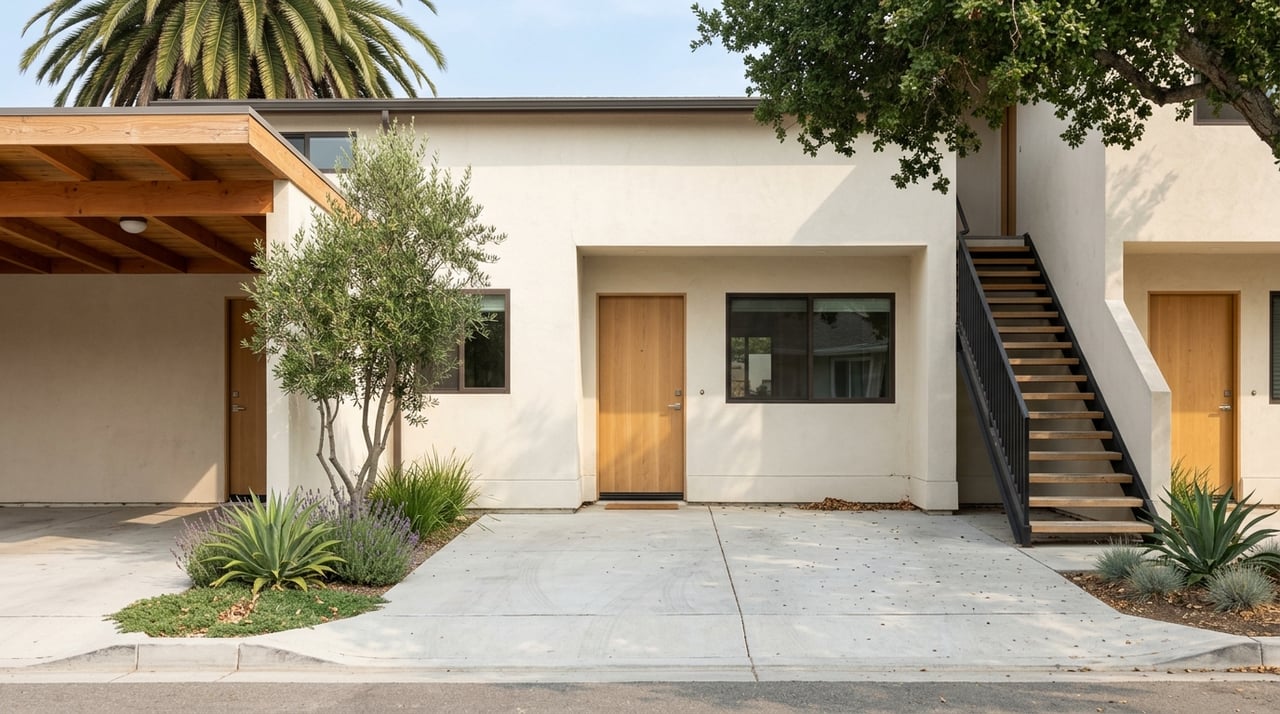
Small Multifamily Investment Opportunities In Arroyo Grande
July 23, 2026
July 23, 2026
Looking for small multifamily property in Arroyo Grande can feel a little like searching for a niche asset in a market better known for single-family homes. That is exactly why these opportunities can stand out for investors, house hackers, and buyers who want income potential on the Central Coast. If you want to understand where the opportunity is, what to watch for, and how to evaluate a deal with confidence, this guide will walk you through it. Let’s dive in.
Arroyo Grande is a relatively small city, and its housing mix tells an important story. The city had an estimated population of 18,249 in 2024, with a 60.6% owner-occupied housing rate. That owner-heavy profile, paired with a median owner-occupied home value of $814,200, points to a market where entry costs are high and investment opportunities need to be chosen carefully.
Small multifamily is also a limited segment of the local housing stock. According to the city’s housing element, 68% of housing units in 2019 were detached single-family homes, while only 5% were in 2 to 4 unit buildings and 11% were in 5+ unit buildings. When supply is this limited, a duplex, triplex, or fourplex can become a scarcity play rather than a high-volume product type.
Housing growth has also been modest. Total housing units rose from 7,628 in 2010 to 7,853 in 2019, which suggests new supply has not dramatically changed the market. For you as a buyer, that can mean well-located small multifamily properties may draw attention when they become available.
In Arroyo Grande, small multifamily usually means infill housing that fits within specific zoning rules. Duplexes, triplexes, fourplexes, and compact apartment buildings are not a blanket use across the city. The city’s housing element shows these uses may be permitted, conditionally permitted, or require a minor use permit depending on the district.
That distinction matters because the opportunity is not just about finding a building with rental income. It is also about confirming what is legally there today and what may be allowed in the future. In a market like Arroyo Grande, the planning and zoning details can have a real effect on value, financing, and long-term plans.
The Village Core is one area worth understanding. The city describes it as a pedestrian-oriented small-town setting that supports a mix of commercial, office, residential, recreational, and community-facility uses. For some buyers, that can make mixed-use or infill property especially interesting, but each parcel still needs to be checked individually.
A large share of Arroyo Grande’s housing stock is older, and that can cut both ways. The city reports that the biggest share of units was built in the 1970s at 24.9%, followed by the 1980s at 18.4%. It also notes that nearly 84% of the housing stock was 20 years or older, and 72% was 30 years or older.
For you, that can mean value-add potential. Older duplexes, triplexes, and fourplexes may offer upside through improved layouts, updated interiors, or better operating efficiency. At the same time, older stock can come with higher due diligence demands around roofs, plumbing, electrical systems, drainage, parking layout, and code-related issues.
This is where careful underwriting matters. A property that looks attractive on paper can change quickly if deferred maintenance or legal nonconforming issues surface during inspections and file review.
Arroyo Grande’s demographics support demand for smaller, lower-maintenance housing. The city’s housing element reports an average household size of 2.47 persons, while current Census figures show 27.4% of residents are age 65 or older and 20.3% are under 18. That mix can support a renter pool that includes single-person households, couples, downsizers, retirees, and smaller households.
Employment patterns also help broaden demand. The city identifies educational services and health care as the largest job category at 22%, followed by arts, entertainment, accommodation, and food services at 14%. Arroyo Grande Community Hospital is also named as a major local employer, and many residents commute beyond city limits, which expands the practical tenant base across South County and the wider Central Coast.
Lifestyle also matters in renter decision-making. Arroyo Grande offers neighborhood and active-use parks, a 26-acre sports complex, an off-leash dog park, a community garden, and trails along Arroyo Grande Creek and the James Way Oak Habitat and Wildlife Preserve. For tenants who want convenience and a smaller-town setting, those amenities can support long-term appeal.
When you evaluate small multifamily, unit mix can make a meaningful difference. The city’s housing element, using a March 2020 Zillow snapshot, reported average monthly rents of $1,532 for a one-bedroom, $1,933 for a two-bedroom, and $2,836 for a three-bedroom unit. The current Census median gross rent is $2,173.
Vacancy is another useful signal. The city reported a 4.2% rental vacancy rate in 2017, which was below the 6% benchmark described in the housing element as desirable. While markets change over time, that figure supports the broader picture of a relatively tight rental environment.
For you, this means configuration matters. A property with a practical mix of unit sizes, usable parking, and updated systems may be better positioned than one that simply has the lowest price per unit.
If you plan to live in one unit and rent the others, Arroyo Grande may offer some appealing house-hacker scenarios. In addition to duplexes and small multifamily buildings, second-dwelling or accessory unit strategies may complement an owner-occupied investment approach.
That said, you should not assume an ADU or second unit is allowed just because a lot looks large enough. The city’s second-dwelling guidance varies by zoning district and applies in many residential and multifamily zones. Parcel-level verification is essential before you base your plan on adding another unit.
The city’s 2024 General Plan Annual Report also shows Arroyo Grande is updating its General Plan, Development Code, and ADU ordinance. It reported 26 ADU permits in 2024, which suggests small-scale infill housing remains part of the local conversation. That does not replace property-specific review, but it does show this is an active planning topic.
In Arroyo Grande, evaluating a small multifamily property should go beyond rent estimates and asking price. The local process and the physical condition of the property can be just as important as projected income.
Focus your review on these core items:
The city’s Planning Division administers the Development Code and handles land-use review. Because the city continues to use permits, conditional-use review, and code amendments in its development pipeline, one of the first diligence questions is often whether the current setup is legal and what approvals would be required for changes.
For some buyers, Arroyo Grande small multifamily can make sense as a 1031 exchange target. In plain English, a 1031 exchange is a tax-deferred strategy that can let you sell one investment property and reinvest into another qualifying property, subject to IRS rules.
The IRS says replacement property generally must be identified within 45 days, and the exchange generally must be completed within 180 days. A qualified intermediary is typically used to facilitate the exchange, and Form 8824 is used for reporting. If you receive cash or other non-like-kind property, part of the exchange may become taxable.
In practical terms, this can fit an investor who wants to reposition a Central Coast portfolio. For example, you might move out of a higher-maintenance or lower-performing rental and into a better-located duplex, triplex, fourplex, or mixed-use property with a stronger long-term operating profile. Because timing and structure matter, these moves are best coordinated early with your CPA, tax attorney, lender, and qualified intermediary.
Arroyo Grande is not a market where small multifamily inventory is everywhere. That is part of the appeal. Limited supply, a mostly single-family housing base, older stock with possible renovation upside, and stable local demand can make the right property compelling.
The best opportunities are often the ones that balance location, legal clarity, and manageable improvement needs. In this market, a disciplined buyer usually does better than a fast buyer who skips zoning review or underestimates capital costs.
If you are considering a duplex, triplex, fourplex, or mixed-use investment in Arroyo Grande, it helps to work with an advisor who understands both the local market and the transaction mechanics behind more technical deals. To talk through a property, exchange timeline, or portfolio repositioning strategy, schedule a free consultation with Jay Peet.
Stay up to date on the latest real estate trends.
Whether it’s the acquisition, sale, or exchange of an investment, a development opportunity, cost segregation, or simply the sale or purchase of a family home, we are here to assist you in accomplishing your goals.