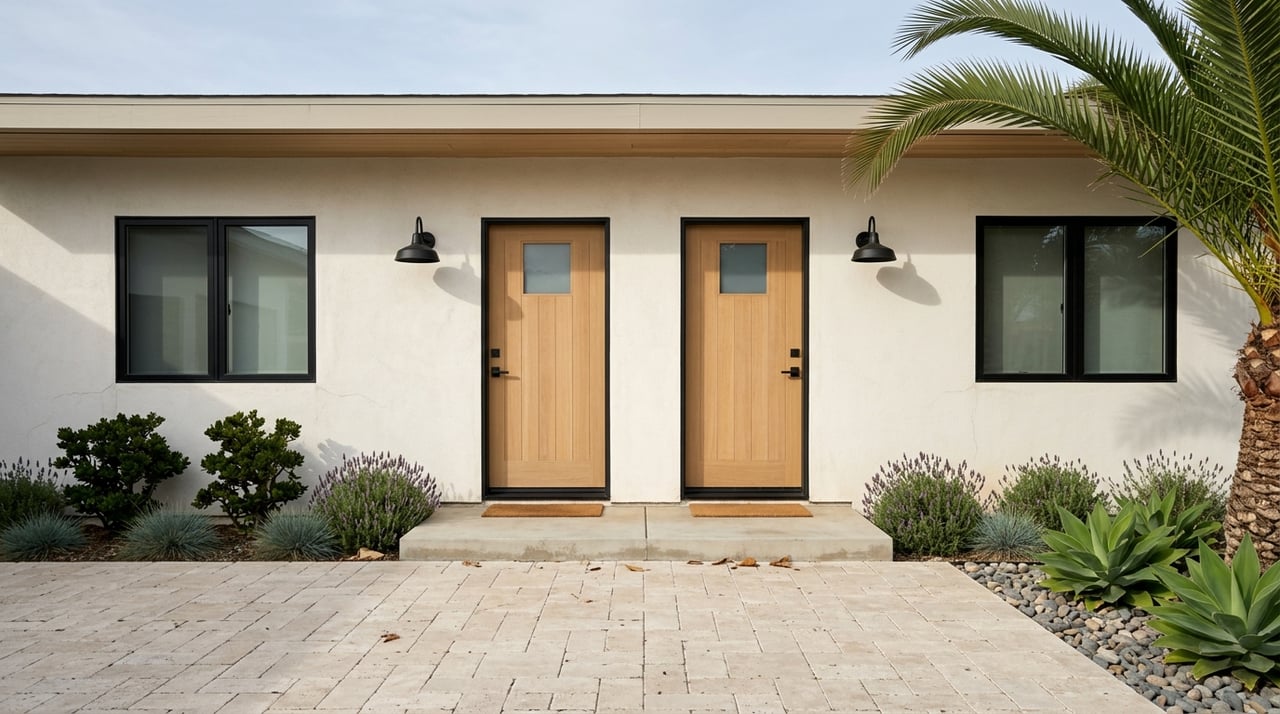
Evaluating Long‑Term Rental Potential In Pismo Beach
July 16, 2026
July 16, 2026
Wondering whether a long-term rental in Pismo Beach can actually pencil out? You are not alone. Between high coastal home prices, limited housing supply, and rules that matter a lot from one property to the next, this is a market where careful analysis matters more than broad assumptions. This guide will help you evaluate rental potential in Pismo Beach with a practical lens so you can make a smarter buy-and-hold decision. Let’s dive in.
Pismo Beach is a small coastal city with an estimated population of 7,911 and 4,129 households. It also has a 64.6% owner-occupied housing rate, a median owner value of $1,021,300, and a median gross rent of $2,232. Those figures point to a higher-cost housing market with a more limited renter base than many larger cities.
The local population profile also matters. About 32.7% of residents are age 65 or older, and the average household size is 1.94 persons. That suggests a mature market where smaller households and lower-maintenance housing may fit year-round demand better than oversized or highly specialized properties.
The city’s housing element also notes a large share of vacation homes and high housing costs. For you as a buyer or investor, that often means long-term success depends less on fast tenant growth and more on buying the right property, structuring it well, and holding through market cycles.
Pismo Beach is not a volume rental market driven by rapid expansion. It is better understood as a premium coastal hold market with meaningful demand, limited inventory, and tighter operational considerations. That changes how you should evaluate opportunity.
In a market like this, the best long-term rentals are often the ones that match the local household mix, stay manageable on expenses, and work even under conservative assumptions. If you are relying on aggressive rent growth or thin-margin cash flow, the numbers may feel less forgiving.
Pismo Beach has a varied housing stock. The city’s housing element reports about 59% single-family detached homes, 11% single-family attached homes, 18% multifamily housing, and 13% mobile homes. Zoning also allows a range of housing types in different districts, including single-family homes, duplexes, triplexes, multifamily properties, condominiums, mobile home parks, and ADUs or JADUs.
For long-term rental use, a few property types tend to stand out based on the city’s housing mix and household profile.
Single-family homes can appeal to tenants looking for more space and privacy. In Pismo Beach, they may also align well with buyers who want flexibility for future personal use or a second-home strategy.
That said, detached homes usually come with higher acquisition costs and often more maintenance. You will want to look carefully at taxes, insurance, upkeep, and whether the expected rent supports your long-term hold goals.
Condos and townhomes can be a practical fit in a market with smaller households and high home values. They often offer a lower entry point than detached homes and may reduce some maintenance responsibilities.
Your due diligence here should include HOA rules, dues, and any rental restrictions. A unit that looks attractive on paper can change quickly if monthly ownership costs are higher than expected or leasing rules are restrictive.
Duplexes, triplexes, and other small multifamily properties can offer useful income diversification. If one unit turns over, the property may still generate income from the others.
In a market like Pismo Beach, small multifamily can be appealing when you want more than one income stream but still want a property that is operationally straightforward. The key is to underwrite each unit conservatively and confirm the legal use before you move forward.
Mobile or manufactured homes may offer a more accessible price point relative to other local housing options. That can make them worth a look if your goal is to control basis and improve rent-to-price balance.
As with any niche property type, you should review the park structure, monthly space costs if applicable, and any occupancy or ownership limitations. These details can strongly affect real returns.
ADUs and JADUs deserve special attention in Pismo Beach. The city says ADUs can be rented separately from the primary residence, but they must be rented for terms longer than 30 days. In the coastal zone, a coastal development permit may be required, and west of Highway 101, parking is required.
The city also states that the owner generally must permanently reside on the parcel unless the property is owned by certain qualifying entities. That makes ADUs potentially useful for some owner-occupants or second-home owners, but not a one-size-fits-all investment play. In Pismo Beach, an ADU strategy is highly property-specific.
Pismo Beach benefits from a broader Central Coast economy with several clear employment drivers. The local tourism bureau describes the city as a popular vacation destination with a vibrant tourist-based economy. At the county level, Tourism, Hospitality, and Recreation represented 19.4% of jobs in the 2023 State of the Workforce report.
Other major job sectors also support year-round housing demand. Healthcare accounted for 15.3% of county jobs, Retail for 13.0%, and Education and Knowledge Creation for 10.8%. That mix suggests demand may come from service workers, healthcare employees, education-related households, and others tied to the region’s daily economy.
The county’s April 2026 labor market report showed a 4.0% unemployment rate, with Leisure and Hospitality adding 400 jobs month over month and Private Education and Health Services adding 100. While no single report guarantees leasing speed, those numbers support the case that long-term rental demand is anchored by more than tourism alone.
One important local factor is constrained year-round supply. The city’s housing element notes a large share of vacation homes, which can reduce the number of units available for full-time residents.
That matters because limited supply can help well-positioned long-term rentals attract attention faster. It does not remove the need for smart pricing, but it can support leasing velocity when the property type and location fit what local renters actually need.
Current asking-rent data shows an average asking rent of $4,175 in Pismo Beach as of July 10, 2026, with 39 available rentals and asking rents ranging from $1,300 to $9,222. By comparison, the Census Bureau reports a median gross rent of $2,232 for occupied units.
That gap is important. Asking rents can reflect the current mix of listings, unit size, condition, and location, while occupied-unit median rent reflects what existing renters are actually paying across the market. You should not assume a new purchase will achieve top-of-range rents without strong support from the property itself.
Home prices also set a high bar. Zillow’s Home Value Index put the average Pismo Beach home at $1,116,456 as of June 30, 2026. When prices are high relative to rents, strong underwriting becomes essential.
In Pismo Beach, it often makes more sense to view a rental purchase as a long-horizon hold than as a pure monthly cash-flow play. You should model:
If the deal only works under best-case assumptions, it may not be the right fit. In a premium coastal market, durability usually matters more than stretching for yield.
California’s Tenant Protection Act can shape your rent-growth and exit assumptions. For covered units, annual rent increases are generally limited to 5% plus CPI or 10%, whichever is lower, and after 12 months of occupancy, just-cause termination rules apply.
Some properties may be exempt, including newer homes and some single-family rentals if statutory conditions and notice requirements are met. Before underwriting a deal around any exemption, you should confirm applicability with qualified legal counsel and a CPA.
Pismo Beach’s short-term rental framework is a major part of rental analysis. The city states that no new short-term rental licenses have been issued since November 7, 2023. It also defines short-term rentals as under-30-day rentals limited to existing permitted addresses, while vacation rentals are allowed only in certain zones.
This has a direct impact on buyers who are comparing long-term rental income with prior vacation-rental performance. If you are considering a property that once looked attractive because of short-stay income, the better question is whether it still works as a long-term lease under today’s rules.
The city also states that ADUs and JADUs cannot be used as short-term rentals and must be occupied for terms longer than 30 days. That makes use restrictions especially important when you evaluate secondary units or conversion potential.
Before you buy a long-term rental in Pismo Beach, focus on a few high-impact questions.
Confirm zoning, current use, and any local rules that affect rental operations. If the property has any short-term rental history or permit status, make sure you understand whether that has any bearing on your future plan.
For condos, townhomes, and planned communities, review HOA documents early. Rental caps, minimum lease terms, occupancy rules, and dues can all affect performance.
If you are counting on an ADU or JADU to improve returns, verify owner-residency requirements, parking rules, and whether a coastal development permit may be required. In Pismo Beach, these details are not minor.
Stress-test the deal with realistic rent, vacancy, and expense assumptions. If your strategy depends on premium pricing, minimal repairs, or no downtime, you may be underestimating risk.
For many buyers, Pismo Beach is best approached as a premium coastal market where the right asset can provide long-term value, but only when the legal structure and operating math make sense. This is often less about chasing high yield and more about protecting downside while owning in a supply-constrained location.
That is especially true if you are balancing personal-use goals, second-home planning, or a 1031 exchange strategy. In those cases, the quality of the property, the fit with local rules, and the long-term hold thesis may matter more than a headline cap rate.
If you want help evaluating a specific Pismo Beach property, planning a long-term hold, or comparing options as part of a broader Central Coast strategy, connect with Jay Peet.
Stay up to date on the latest real estate trends.
Whether it’s the acquisition, sale, or exchange of an investment, a development opportunity, cost segregation, or simply the sale or purchase of a family home, we are here to assist you in accomplishing your goals.