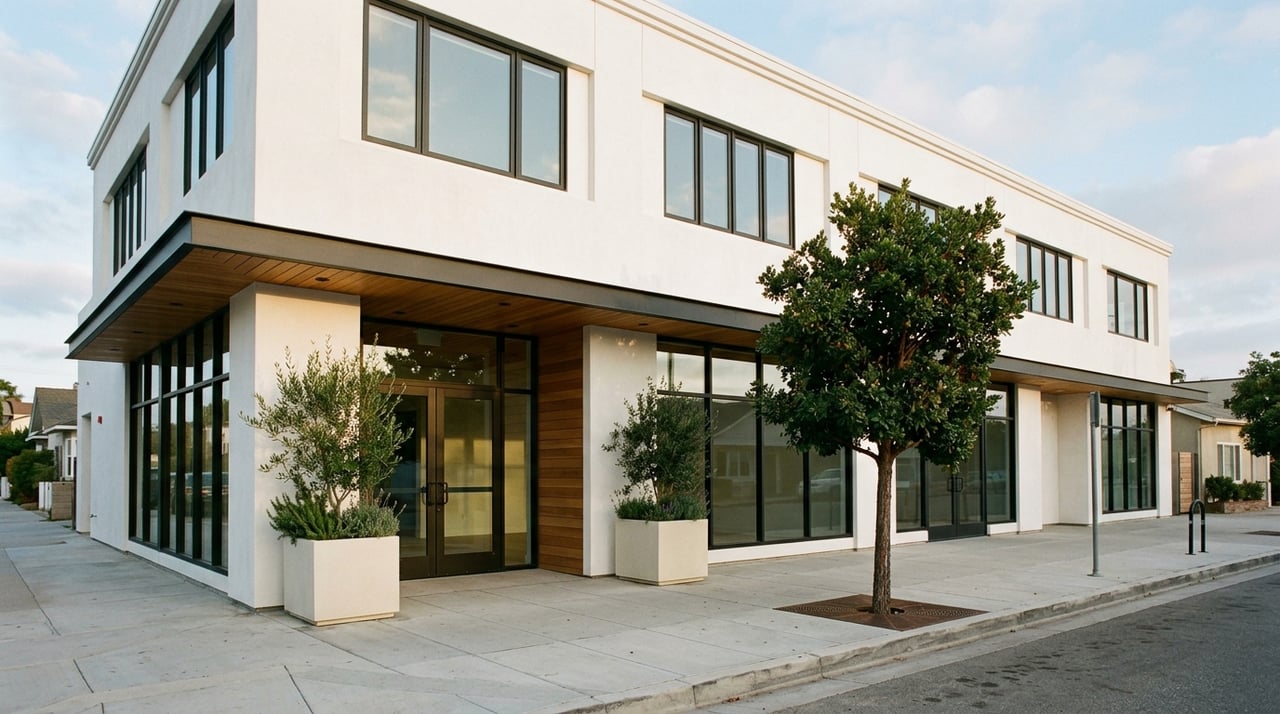
Pismo Beach Commercial Real Estate for Small Mixed-Use
April 23, 2026
April 23, 2026
If you are looking at small commercial or mixed-use property in Pismo Beach, you are not just buying square footage. You are buying into a coastal market shaped by visitor traffic, walkability, design standards, and a layered approval process. That can create real opportunity, but it also means the best deals are often the ones you understand deeply before you write an offer. Let’s dive in.
Pismo Beach is a small coastal city with about 8,630 residents, but its visitor economy is much larger than its year-round population suggests. The city reports a seasonal tourist population that can reach 35,000, and annual events can draw up to 100,000 people. According to the city, transient occupancy tax generated $15.18 million and made up about 34.9% of governmental revenues, which underscores how important tourism is to the local economy.
That matters if you are evaluating a storefront, a service property, or a mixed-use building. In a market like this, foot traffic, visibility, and visitor demand can play an outsized role in property performance. It also means your underwriting needs to reflect both opportunity and seasonality.
Pismo Beach is a small market, so the most relevant opportunities usually fall into a handful of formats. Based on the city’s zoning framework, the property types you are most likely to encounter include:
The city’s commercial districts help shape what is possible. The downtown commercial areas support pedestrian-scale uses, visitor-serving uses, mixed commercial uses, and mixed-use projects, while other districts allow retail, office, personal service, and certain visitor-oriented formats. You can review the city’s zoning framework in the Pismo Beach municipal code.
For public market benchmarks, the broader San Luis Obispo retail market offers the clearest picture. Colliers reported 4.1% overall vacancy, 4.9% availability, average rent of $28.10 per square foot, average market sale price of $305 per square foot, and 17% rent growth over five years.
That backdrop suggests healthy regional demand, supported by a diversified economy that includes tourism, agriculture, manufacturing, health services, and the broader influence of Cal Poly. For Pismo Beach specifically, the strongest demand drivers often come from customer-facing uses that benefit from coastal visibility, pedestrian traffic, and visitor activity.
Still, strong demand does not erase operating risk. Colliers also noted that inflation and labor laws can pressure smaller businesses, which is especially relevant if you are evaluating restaurants, boutiques, or service tenants. In other words, a busy location is helpful, but tenant durability still matters.
In Pismo Beach, not all commercial locations function the same way. A property’s street presence, parking setup, and connection to pedestrian traffic can all influence leasing strength and long-term value.
The city’s planning approach emphasizes a pedestrian-oriented environment. Pismo Beach also offers discounted parking permits for residents, business owners, and employees in designated downtown lots, while site-planning standards encourage buildings near the street, pedestrian connections to sidewalks, and screened parking and loading areas.
For you as a buyer or investor, that means street-front assets may have an edge over more hidden or auto-oriented properties. In a coastal town where people often move on foot between lodging, dining, shopping, and the beach, frontage and accessibility can be major value drivers.
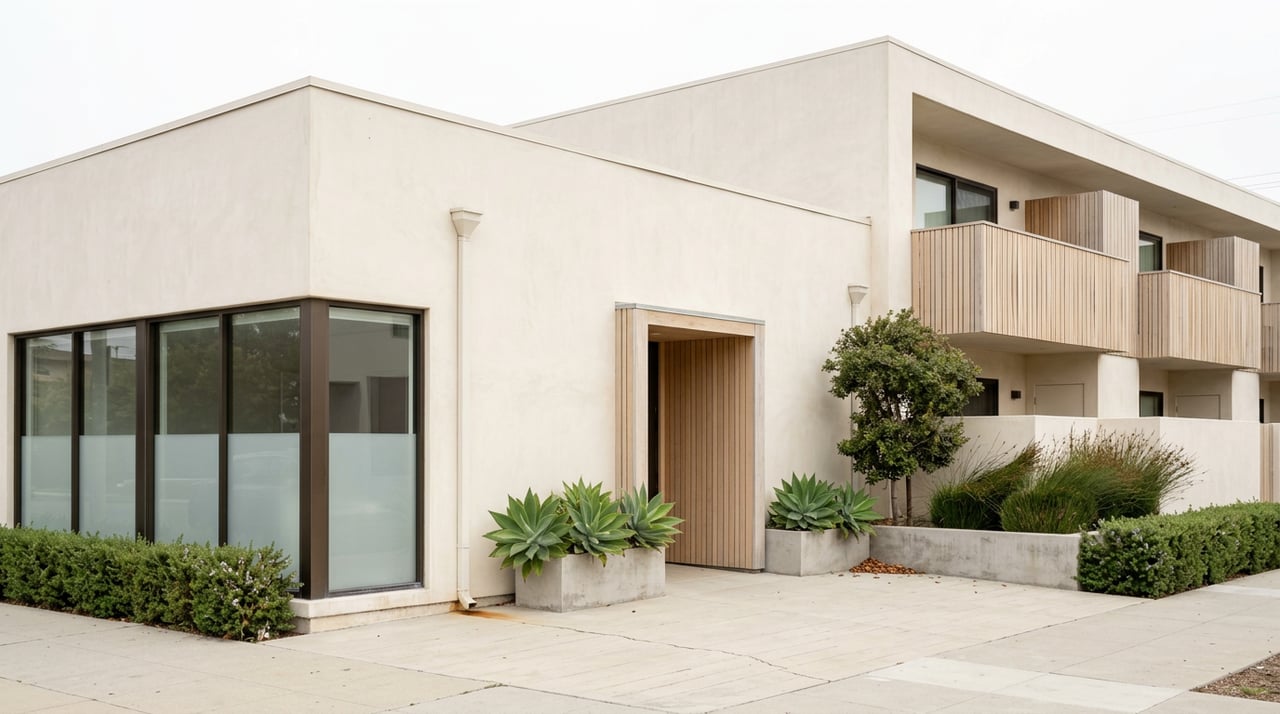
Mixed-use property can be especially appealing in Pismo Beach because it allows you to combine commercial exposure with residential income potential. But these projects also come with clear design and use requirements.
The city requires that, in mixed-use projects, the entire ground-floor street frontage must generally be devoted to retail or other commercial uses, except for circulation and loading, with only narrow exceptions for residential units at street level. Residential parking must also be provided on site and reserved for residents. You can see those rules in the city’s mixed-use development standards.
That has practical implications for underwriting. Ground-floor activation, tenant mix, parking layout, and building design are not side issues here. They are central to whether the project works.
Pismo Beach is not simply chasing density or maximum buildout. The city states that it wants to allow new and infill development while preserving its unique small coastal town character, which you can see on the city’s Planning Department page.
Downtown design standards reinforce that goal. The code says these standards are intended to promote a strong pedestrian orientation and preserve historic and contextual building elements. It also requires substantial transparency at the street level, with storefronts generally designed to include roughly 60% to 85% window area on the first floor and at least 35% window area on upper-story street walls in applicable areas. Those requirements are outlined in the city’s commercial design standards.
Site planning rules add more detail. Buildings are generally expected to run parallel to the street and sit close to the street edge where setbacks allow. Commercial sites should place at least 30% of total building frontage close to the front setback line, while parking lots should be screened and loading areas placed at the rear when possible. These standards appear in the city’s site-planning regulations.
For you, this means design compliance is not just an architect’s concern. It can directly affect cost, timing, leasing appeal, and the ease of getting approvals.
In many inland markets, buyers focus mostly on rents, expenses, and cap rate. In Pismo Beach, you also need to pay close attention to entitlement and review pathways.
The city notes that most development requires planning permits, either through staff-level administrative review or Planning Commission review, and location plays a major role. Inside the coastal zone, virtually all projects in all zones except some R-1 and R-2 projects require a public hearing by the Planning Commission, and nearly all projects inside the Coastal Appeal Zone also require Planning Commission review. Planning staff also oversee environmental review under CEQA, as described in the city’s application process overview.
Overlay districts can add another layer, especially near the downtown coastal core. Height, noise, view protection, and coastal appeal considerations can all affect timing and feasibility. That is why in Pismo Beach, the permit path can be part of the asset’s value story, especially for a mixed-use or repositioning play.
City-specific public cap-rate series for Pismo Beach were not identified in the research, so the best benchmark comes from the broader San Luis Obispo retail market. Colliers reported that small retail cap rates typically range from 6.0% to 6.4%, with smaller retail properties under 6,000 square feet making up much of the transaction activity and often appealing to private investors and 1031 exchange buyers.
That range is only a starting point. In Pismo Beach, pricing and yield expectations should be adjusted for factors like coastal location, tenant quality, lease term, parking, deferred maintenance, and entitlement risk. A stabilized street-front coastal asset may justify stronger pricing than a property that needs extensive renovation, lease-up, or planning approvals.
If you are considering a small commercial or mixed-use acquisition in Pismo Beach, your analysis should go beyond basic income and expense projections. You need to evaluate how the property fits the city’s operating environment and approval framework.
A few priorities usually deserve extra attention:
These questions are especially important for owner-users, 1031 exchange buyers, and value-add investors. In Pismo Beach, the difference between a good opportunity and a frustrating one often comes down to details that are easy to miss early on.
Small coastal markets can be deceptively complex. Pismo Beach may look straightforward on the surface, but zoning distinctions, design expectations, coastal review, and property-specific access issues can all influence outcomes.
If you are buying for income, redevelopment, or a blended live-work strategy, it helps to work with an advisor who understands both the local market and the mechanics behind commercial transactions. That is especially true if your purchase is tied to a 1031 exchange timeline, a repositioning plan, or an entitlement strategy.
When you are ready to evaluate opportunities in Pismo Beach, connect with Jay Peet for informed, local guidance on small commercial and mixed-use property.
Stay up to date on the latest real estate trends.


Whether it’s the acquisition, sale, or exchange of an investment, a development opportunity, cost segregation, or simply the sale or purchase of a family home, we are here to assist you in accomplishing your goals.