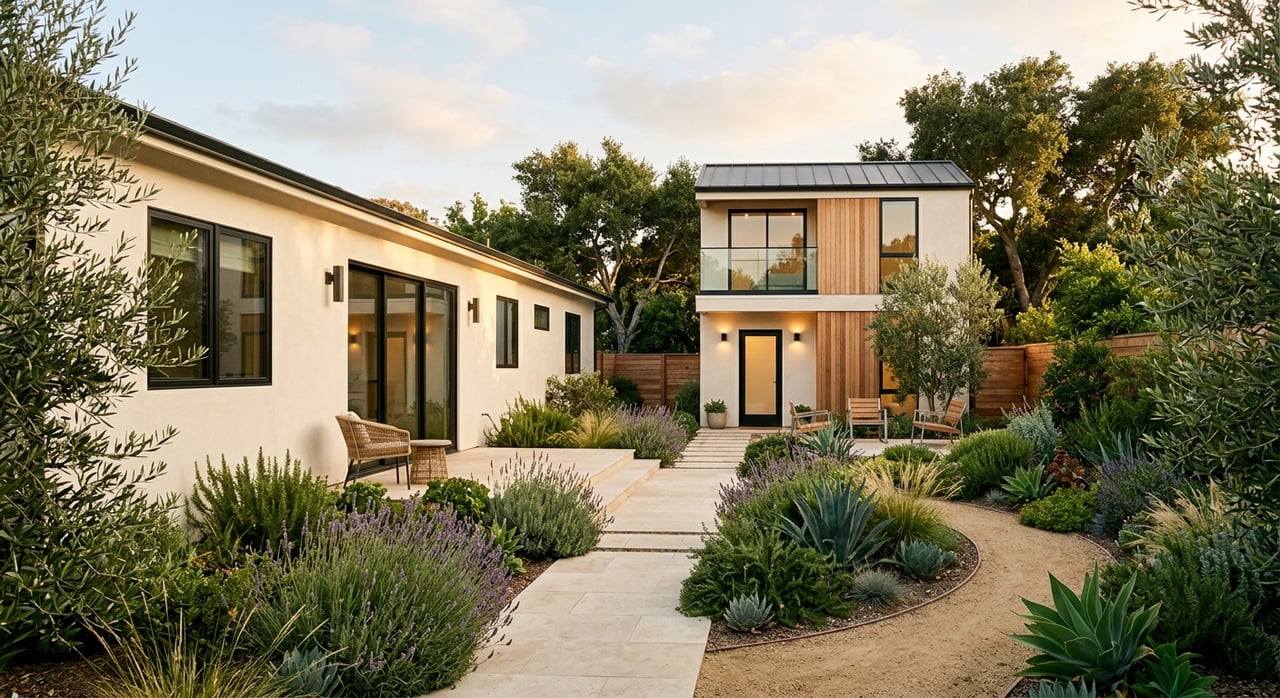
Understanding Arroyo Grande ADU Rules for Homeowners
May 14, 2026
May 14, 2026
Wondering whether an ADU could make your Arroyo Grande property work harder for you? If you want more living flexibility, space for long-term rental use, or a way to plan ahead for changing household needs, this is one of the most practical opportunities in today’s local market. Arroyo Grande has a relatively clear ADU path, and understanding the rules can help you make smarter decisions before you spend time and money on plans. Let’s dive in.
In Arroyo Grande, accessory dwelling units can be attached, detached, converted from existing space, or built as junior ADUs, also called JADUs. The city permits ADUs in residential zoning districts through the Building Permit plan review process, which gives homeowners a more direct path than many people expect.
That matters because the biggest question often is not whether an ADU is allowed. It is which type of ADU makes the most sense for your lot, your budget, and your long-term goals.
For many single-family properties, Arroyo Grande allows a strong amount of flexibility. City guidance shows a typical maximum of four total units on one parcel: the primary home, one JADU, one converted ADU, and one detached ADU.
That framework creates real opportunity for homeowners who want to add living space without completely reworking their property. It also gives you options if you are thinking about phased improvements over time rather than one large project all at once.
The city handout outlines these common size limits:
Height standards are also relatively workable. Detached ADUs may go up to 18 feet, while attached or over-garage ADUs may go up to 25 feet, with a two-story limit.
One reason ADUs can be attractive is that the setback rules are often easier than standard addition rules. Arroyo Grande shows 4-foot side and rear setbacks, a front setback range of 0 to 20 feet, and no setback requirement for an ADU built within the footprint of an existing structure.
If you are converting an existing garage or another enclosed structure, that can be especially helpful. In many cases, converted structures can remain where they already sit, which can simplify design and preserve more of your yard.
Parking is a common concern for homeowners, but Arroyo Grande’s rules can remove a major hurdle. The city says no parking is required for ADUs or JADUs established within an existing structure, and no replacement parking is required when a garage or parking space is converted or removed for an ADU.
For many properties, that can make a conversion much more practical. It may also reduce the need for costly site redesign just to create new parking areas.
Not every ADU path offers the same balance of cost, speed, and flexibility. In Arroyo Grande, three options tend to stand out based on the city’s rules and process.
If your main goal is to control costs, a conversion is often the most efficient place to start. Reusing existing walls, rooflines, and utility pathways can reduce complexity, and city rules around setbacks and parking are often more favorable for these projects.
This route may work well if you have underused enclosed space and want a smaller, practical unit for long-term rental use, guests, or independent household space. It can also be attractive if you want to avoid the footprint and site work of a detached build.
A smaller detached ADU can offer a strong middle ground. You get separation from the main home, which many owners and occupants prefer, while keeping the build more manageable than a large custom structure.
This option may be especially appealing if you want long-term flexibility without committing to the highest construction budget. Under state law, ADUs under 750 square feet also avoid local impact fees, which can improve the overall math of the project.
If your lot is deep enough and your budget allows, a larger detached ADU can create more long-term use options. A unit closer to the upper end of the city’s size limits may suit homeowners who want a more independent living setup or more adaptable future use.
That said, larger projects usually bring more cost, more utility planning, and potentially more fees. Before going this route, it helps to compare the extra construction cost with the flexibility you expect to gain.
One of the most useful local tools is the city’s regional pre-approved ADU plan program. Arroyo Grande participates with Atascadero, Grover Beach, and Morro Bay in a program designed to speed approvals and reduce design cost.
The available plans range from a 316-square-foot studio to a 1,007-square-foot two-bedroom design. The city says these plans come in four architectural styles, which can help homeowners choose something that fits the look of their property.
Using a pre-approved plan does not eliminate every project step, but it can simplify the process. Instead of starting from scratch on design, you begin with a plan the city already knows and supports.
That can be helpful if your priority is efficiency, predictability, or lower design expense. It may also reduce decision fatigue if you want a practical ADU solution rather than a fully custom build.
Arroyo Grande uses a digital permit process. Building permit applications are submitted through the city’s permit portal, and homeowners are directed to upload plans online.
For pre-designed plans, the city says you should select a size and style, submit plan review fees, provide stormwater documents, and include a site plan. That site plan should show property lines, the ADU footprint, distances to structures, utility connections, erosion control, and easements.
The city says completeness is checked within 15 days. After an application is complete, the city approves or denies within 60 days.
For homeowners, that timeline is important because it creates a more defined planning window. It does not mean construction starts immediately, but it does mean you can usually map out the approval phase with more clarity than you might expect.
ADU budgets are not just about the structure itself. In Arroyo Grande, the city says JADUs and converted ADUs do not need separate city utilities or fees, while other ADUs generally require separate city utility connections with fees tied to actual costs.
That distinction can materially change your budget. A compact conversion may look very different on paper than a new detached ADU that needs additional utility work.
As you plan, be sure to account for site-specific items that can affect feasibility, including:
If your property uses an onsite wastewater system, the local agency may require a recent or recertified percolation test as part of the application. That is one more reason to assess the site early before you settle on a final ADU strategy.
The city’s materials describe ADUs as a way to create rental income, support aging in place, and provide independent space for family members or guests. That makes them useful whether you are thinking about household planning, property value strategy, or long-term income potential.
There are use rules to keep in mind. State guidance says ADUs and JADUs generally must be rented for terms longer than 30 days, and local jurisdictions may restrict short-term rentals.
If a JADU shares a bathroom with the main home, the owner must occupy either the JADU or the primary residence, subject to exceptions. That is an important detail if you are comparing a JADU with a fully separate ADU for rental purposes.
For many owners, this is where planning matters most. The right unit is not just the one that fits on the lot. It is the one that aligns with how you want to use the property over the next several years.
If your property already has an older unpermitted unit, Arroyo Grande has a streamlined path under AB 2533 for ADUs or JADUs built before January 1, 2020 without an approved permit. The city says it cannot deny a qualifying permit solely for code violations or noncompliance with ADU law unless health and safety findings or substandard conditions justify correction.
For some homeowners, that creates a valuable opportunity to bring an existing unit into a more formal process. The city also notes that certain impact and connection charges may be limited in that legalization path.
For most Arroyo Grande homeowners, the best choice comes down to three factors: lot layout, budget, and intended use. A conversion may offer the lowest soft-cost profile, a compact detached unit may provide the best balance of privacy and cost, and a larger detached ADU may create the most long-term flexibility.
The key is to start with the property, not just the idea. Utility access, site work, easements, and overall layout can all affect what makes sense in real life.
If you are evaluating an Arroyo Grande property for ADU potential, or weighing whether to buy, hold, improve, or reposition a home with added living space in mind, local guidance makes a difference. A clear strategy upfront can help you avoid overbuilding, underplanning, or missing a better-fit option. When you want experienced Central Coast insight with a practical, high-touch approach, connect with Jay Peet.
Stay up to date on the latest real estate trends.

Whether it’s the acquisition, sale, or exchange of an investment, a development opportunity, cost segregation, or simply the sale or purchase of a family home, we are here to assist you in accomplishing your goals.